Table of Contents
Key Takeaways
- The scalp is an extension of your facial skin and requires similar care — cleansing, exfoliating, moisturizing, and protecting
- Common scalp issues like dandruff, seborrheic dermatitis, and psoriasis each require different treatment approaches and ingredients
- Regular scalp exfoliation removes dead skin cells and product buildup that can clog follicles and impede hair growth
- Key active ingredients include salicylic acid, tea tree oil, zinc pyrithione, ketoconazole, and niacinamide for targeted scalp concerns
- Daily scalp massage improves circulation and can increase hair thickness over time with consistent practice
Most haircare routines focus on the strands — the part of hair you see and style every day. But healthy hair starts at the root, literally. The scalp is living skin that houses approximately 100,000 hair follicles, each one responsible for producing a single strand. When the scalp environment is unhealthy, those follicles cannot function optimally, and hair growth suffers.
Scalp care is experiencing a well-deserved renaissance in the beauty industry, moving from an afterthought to a foundational step in any serious haircare routine. This guide explains the anatomy of the scalp, common conditions that disrupt hair growth, the role of exfoliation, the ingredients that make a difference, and the techniques you can use at home for a healthier scalp.
Scalp Anatomy: Why It Matters for Hair Growth
The scalp is structurally similar to the skin on your face — it has the same layers (epidermis, dermis, hypodermis), the same types of glands (sebaceous, sweat), and the same microbiome. However, the scalp has several unique features. It has the highest density of hair follicles on the body, each follicle surrounded by sebaceous glands that produce sebum. The scalp also has a richer blood supply than facial skin, which is essential for delivering nutrients to growing hair follicles.
Hair growth occurs in cycles. The anagen (growth) phase lasts 2 to 7 years for scalp hair and determines how long your hair can grow. The catagen (transition) phase lasts about 2 weeks, and the telogen (resting) phase lasts about 3 months before the hair sheds and the cycle restarts. A healthy scalp environment — proper oil balance, good circulation, low inflammation, and a balanced microbiome — supports longer anagen phases and reduces premature shedding.
When the scalp is unhealthy, the hair growth cycle shortens. Chronic inflammation around the follicle, often caused by conditions like dandruff or seborrheic dermatitis, can push follicles into the telogen phase prematurely, leading to increased shedding and thinner hair over time.
Common Scalp Conditions and Their Causes
Dandruff
Dandruff affects approximately 50 percent of the global population at some point in their lives. It is caused by an overgrowth of Malassezia, a yeast-like fungus that naturally lives on the scalp. Malassezia feeds on sebum, and when sebum production increases, the yeast population grows uncontrollably. The scalp responds by accelerating skin cell turnover, producing the visible white or yellow flakes characteristic of dandruff.
Dandruff is not a hygiene issue — people who wash daily can still have dandruff if their scalp produces excess sebum that feeds the yeast. Effective treatments include antifungal ingredients like ketoconazole, zinc pyrithione, selenium sulfide, and climbazole. Tea tree oil has natural antifungal properties and can be a complementary treatment.
Seborrheic Dermatitis
Seborrheic dermatitis is a more severe, inflammatory form of dandruff. In addition to flaking, it causes redness, itching, and greasy-looking patches on the scalp, behind the ears, and on the eyebrows. It is also driven by Malassezia overgrowth but involves an inflammatory response from the immune system. Treatment requires antifungal shampoos combined with anti-inflammatory ingredients. Salicylic acid helps remove scale buildup, while corticosteroids may be needed for severe inflammation under medical supervision.
Scalp Psoriasis
Psoriasis is an autoimmune condition that causes the immune system to attack healthy skin cells, accelerating their production. On the scalp, this appears as thick, silvery-white plaques that can extend beyond the hairline onto the forehead, neck, and ears. Unlike dandruff flakes, psoriasis plaques are thicker, drier, and more adherent to the scalp. Treatment includes salicylic acid to soften and remove scales, coal tar to slow cell turnover, and prescription treatments for moderate to severe cases.
"The scalp microbiome is as important as the gut microbiome for overall skin health. Disrupting it with harsh antibacterial products can worsen conditions like dandruff by eliminating beneficial bacteria that keep Malassezia in check. A balanced approach to scalp cleansing preserves the natural ecosystem while controlling pathogens."
Scalp Exfoliation: Techniques and Tools
Scalp exfoliation removes dead skin cells, excess sebum, and product buildup that accumulate around hair follicles. When these materials build up, they can clog the follicular opening, potentially impeding hair growth and creating an environment where Malassezia thrives. Exfoliation also improves product penetration, allowing medicated shampoos and treatments to reach the follicles more effectively.
Physical exfoliation: Uses tools like silicone scalp brushes, bamboo bristle brushes, or manual scrubs with fine particles. Silicone brushes are gentler than plastic ones and suitable for most scalp types. Use circular motions with light pressure before or during shampooing. Physical exfoliation is effective for removing visible flakes and buildup but can irritate sensitive or inflamed scalps.
Chemical exfoliation: Uses acids and enzymes that dissolve the bonds between dead skin cells. Salicylic acid (beta hydroxy acid) is the most common chemical exfoliant for the scalp because it is oil-soluble and penetrates deep into follicles. Lactic acid and glycolic acid (alpha hydroxy acids) are water-soluble and work on the surface. Chemical exfoliants are available as leave-on serums, pre-shampoo treatments, and rinse-off masks. They are gentler than physical scrubs and better for sensitive scalps.
Enzyme exfoliation: Uses fruit enzymes like papain (from papaya) and bromelain (from pineapple) that digest dead skin cells. Enzyme exfoliants are the gentlest option, making them ideal for psoriatic or highly sensitive scalps. They are typically left on the scalp for 5 to 10 minutes before shampooing.
Key Ingredients for Scalp Health
Salicylic Acid: A beta hydroxy acid that penetrates oil-filled follicles and dissolves the intercellular glue holding dead skin cells together. It is the gold standard for dandruff, seborrheic dermatitis, and oily scalps. Available in concentrations of 0.5 to 3 percent in over-the-counter products.
Tea Tree Oil: Has natural antimicrobial and anti-inflammatory properties. Studies show that 5 percent tea tree oil shampoo significantly reduces dandruff severity. It also provides a cooling sensation that soothes itching. Dilute with a carrier oil for direct scalp application — undiluted tea tree oil can cause irritation.
Zinc Pyrithione: An antifungal and antibacterial agent that targets Malassezia. It is one of the most common active ingredients in dandruff shampoos and has a good safety profile for long-term use.
Ketoconazole: A potent antifungal that disrupts Malassezia cell membranes. Available in 1 percent over-the-counter and 2 percent prescription strength. It is effective for stubborn dandruff and seborrheic dermatitis and does not lose effectiveness with continued use.
Niacinamide (Vitamin B3): Strengthens the skin barrier, reduces inflammation, and regulates oil production. It is particularly beneficial for scalps that are both oily and sensitive. Look for it in leave-on serums and treatment products.
For more on understanding how ingredients work, see how to read skincare ingredient labels like a pro — the same principles apply to scalp treatments. And for building a full routine, check the complete guide to building an acne-safe skincare routine for cross-category ingredient strategies.
Scalp Massage Techniques
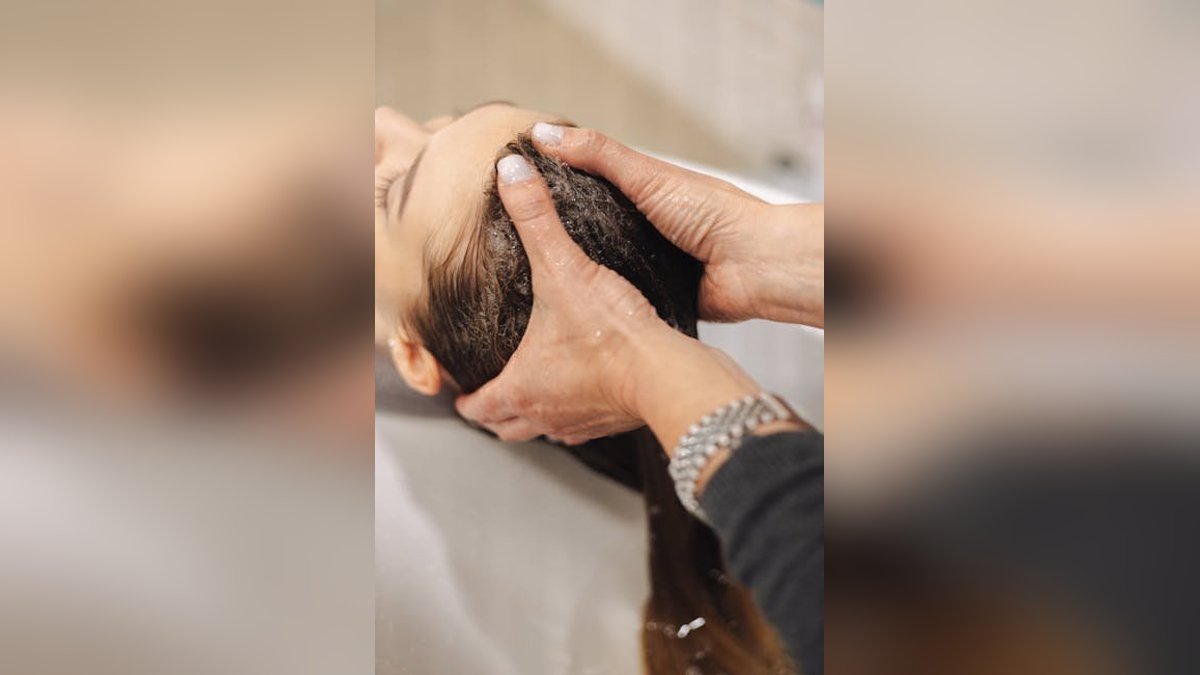
Scalp massage is one of the simplest and most effective practices for improving scalp health. A 2016 study published in Eplasty found that healthy men who received daily 4-minute scalp massages for 24 weeks showed significantly thicker hair compared to the control group. The mechanism is thought to involve increased blood flow to hair follicles, mechanical stretching of hair follicle cells that stimulates growth, and reduction of stress hormones that can trigger shedding.
Basic technique: Place your fingertips (not nails) on your scalp with firm but gentle pressure. Move your fingers in small circles, working from the front hairline to the back of the head and from the ears to the crown. Spend extra time on areas that feel tight or tender. Aim for 3 to 5 minutes daily. For best results, perform massage before shampooing when your scalp is dry, or during conditioning when your fingers slide more easily through wet hair.
Tool-assisted massage: Silicone scalp massagers are handheld devices with soft nubs that mimic fingertip pressure. They provide consistent pressure across the scalp and are particularly effective for distributing shampoo during washing. Electric scalp massagers offer vibration that can enhance relaxation and circulation. Choose silicone over plastic for gentler contact.
A healthy scalp is the foundation of healthy hair. By addressing scalp conditions early, exfoliating regularly, using targeted ingredients, and incorporating daily massage, you create the optimal environment for hair growth. For further reading, see How to Identify Your Acne Type and Choose the Right ... for understanding how active ingredients work on skin.
Frequently Asked Questions
Common concerns about scalp health and hair growth
How often should I exfoliate my scalp?
Scalp exfoliation should be done once per week for most people. If you have oily hair or dandruff, twice per week may be beneficial. If you have a sensitive scalp or conditions like psoriasis, start with once every two weeks and adjust based on tolerance. Over-exfoliating can strip the scalp barrier and cause irritation, so pay attention to how your scalp responds after each treatment.
Can scalp massage really help hair growth?
Regular scalp massage has been shown to increase hair thickness over time, likely by improving blood circulation to hair follicles and reducing stress. A 2016 study found that daily 4-minute scalp massages over 24 weeks resulted in significantly thicker hair. While more research is needed, massage is a low-risk, zero-cost practice that also relaxes the scalp muscles and helps distribute natural oils.
What is the difference between dandruff and dry scalp?
Dandruff is caused by an overgrowth of Malassezia yeast that feeds on scalp oils, leading to larger, yellowish, greasy flakes and often itchiness. Dry scalp results from lack of moisture, producing smaller, white, dry flakes without the greasy appearance. Dandruff requires antifungal ingredients like ketoconazole, zinc pyrithione, or selenium sulfide, while dry scalp benefits from moisturizing shampoos and reduced washing frequency.
Which ingredients should I look for in a scalp treatment?
Salicylic acid penetrates follicles and dissolves buildup, making it excellent for oily scalps and dandruff. Tea tree oil has antimicrobial properties that reduce Malassezia yeast. Zinc pyrithione fights dandruff-causing fungi. Niacinamide strengthens the skin barrier and reduces inflammation. Ketoconazole is a potent antifungal for stubborn dandruff. Glycerin and aloe vera hydrate dry scalps without clogging pores.
Does washing hair less frequently improve scalp health?
For some people, washing less frequently allows the scalp microbiome to balance naturally. However, for those with oily scalps or dandruff, infrequent washing allows sebum and dead skin cells to accumulate, worsening symptoms. The ideal frequency depends on your scalp type — oily scalps need washing every 1 to 3 days, while dry scalps can go 4 to 7 days. Listen to your scalp rather than following trends.
Related Articles
Your Next Step
Start paying attention to your scalp. Notice whether it feels tight, oily, dry, or itchy and look for visible flakes or redness. Choose a targeted treatment based on your primary concern — an antifungal shampoo for dandruff, salicylic acid for buildup, or a moisturizing scalp serum for dryness.
Incorporate scalp massage into your daily routine for 3 to 5 minutes and exfoliate once per week. Give your scalp routine at least 4 to 6 weeks to show visible results, as the hair growth cycle moves slowly. A healthy scalp will reward you with stronger, shinier, and longer hair. For more haircare guidance, explore our All Articles.