Table of Contents
Key Takeaways
- Retinol, vitamin C, hyaluronic acid, and peptides form the core of effective anti-aging for men
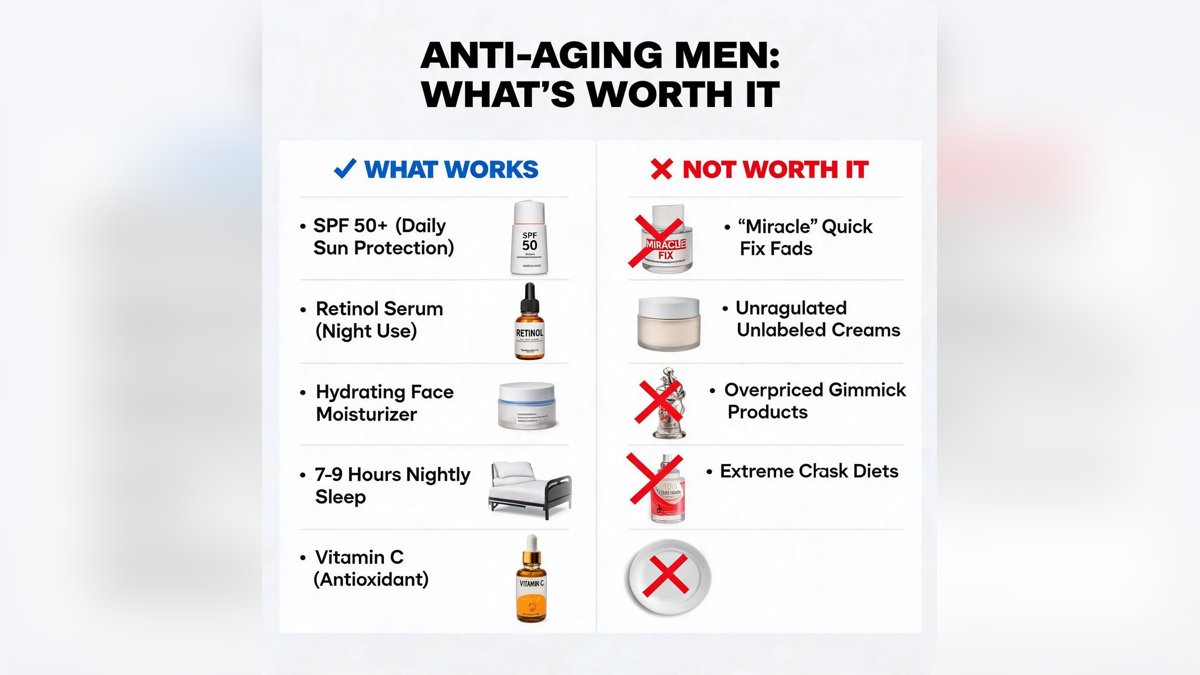
- Daily SPF 30 or higher is the single most effective anti-aging step — no ingredient replaces sun protection
- Sleep quality, hydration, diet, and stress management directly affect skin aging more than any topical product
- Most drugstore anti-aging creams with vague claims are worth skipping — focus on proven ingredients at effective concentrations
- Eye cream can help, but a good moisturizer used around the eyes works nearly as well
The anti-aging market is flooded with products making bold claims, most of which are exaggerated or outright misleading. For men, the situation is especially confusing because most anti-aging marketing targets women, leaving men either ignoring the category entirely or buying products that do not suit their skin. This guide cuts through the noise and focuses on what actually works, what is worth skipping, and what makes a real difference as you age.
Anti-aging for men is not about chasing youth or trying to look 25 forever. It is about maintaining healthy, resilient skin that reflects your vitality at any age. The principles are straightforward — use proven ingredients, protect your skin from damage, and support your body with healthy lifestyle habits.
Key Anti-Aging Ingredients for Men
Four ingredients form the core of any effective anti-aging routine for men. Retinol is a vitamin A derivative that accelerates cell turnover, stimulates collagen production, and smooths fine lines and wrinkles. It is the most clinically proven anti-aging ingredient available without a prescription. Start with a low concentration of 0.25 to 0.3 percent, applied twice per week at night, and gradually increase frequency as your skin builds tolerance. Apply retinol to dry skin and always follow with moisturizer.
Vitamin C is a powerful antioxidant that neutralizes free radicals from UV exposure and pollution. It brightens the skin, reduces dark spots, and supports collagen synthesis. Apply a vitamin C serum in the morning before moisturizer and sunscreen. Hyaluronic acid holds up to 1,000 times its weight in water, providing deep hydration that plumps the skin and reduces the appearance of fine lines. It works for all skin types and causes no irritation. Peptides are amino acid chains that signal the skin to produce more collagen. They are gentle and effective for long-term skin firmness improvement.
Eye Cream for Men: Does It Matter?
The skin around the eyes is the thinnest on the face and shows signs of aging first. Eye creams are formulated to address specific concerns in this delicate area — puffiness, dark circles, fine lines, and dryness. A good moisturizer used around the eyes provides most of the same benefits. The advantage of dedicated eye creams is that they are tested for use around the eyes and contain ingredients targeted at common eye-area concerns, such as caffeine for puffiness or peptides for firmness.
SPF Compliance: The Non-Negotiable
No anti-aging ingredient works as effectively as sunscreen. UV radiation is responsible for approximately 80 percent of visible facial aging, including wrinkles, pigmentation, and loss of elasticity. No serum, cream, or treatment reverses sun damage as effectively as preventing it in the first place. Use a broad-spectrum SPF 30 or higher every single day.
"The most sophisticated anti-aging routine is useless without daily SPF compliance. UV damage accumulates silently. A man who uses sunscreen daily from age 20 will have dramatically younger-looking skin at 50 than a man who starts retinol at 40 but skips sunscreen."
Lifestyle Factors That Show on Your Face
Topical products can only do so much. Sleep quality is crucial — during deep sleep, your body produces growth hormone and repairs cellular damage. Chronic sleep deprivation elevates cortisol, which breaks down collagen and elastin. Aim for seven to nine hours per night. Hydration keeps skin cells plump and functional. Drink enough water and limit alcohol and caffeine. Diet matters — antioxidant-rich foods and healthy fats support the skin barrier. Stress management is also essential, as chronic stress weakens the skin barrier and accelerates aging.
What Treatments Are Worth Skipping
Most drugstore anti-aging creams with vague marketing claims contain minimal active ingredients at ineffective concentrations. Skip products that do not list specific ingredient percentages. Avoid aggressive treatments like high-concentration chemical peels or strong prescription retinoids without professional guidance. For a complete foundation routine, see How to Identify Your Acne Type and Choose the Right ....
Frequently Asked Questions
Common concerns about men's grooming
At what age should men start using anti-aging products?
Preventative anti-aging can start in the mid-to-late twenties. Sunscreen should start as early as adolescence. Retinol can be introduced around age 25 to 30 for prevention. Vitamin C serum is beneficial from the late twenties onward.
Is retinol safe for men with sensitive skin?
Retinol can be used by men with sensitive skin if introduced correctly. Start with a low concentration of 0.25 percent applied once every three nights for two weeks. The sandwich method — moisturizer, retinol, moisturizer — further reduces irritation.
Do anti-aging supplements like collagen peptides work?
Oral collagen supplements have shown modest benefits in some studies. However, a protein-rich diet provides the same building blocks. Vitamin C is essential for natural collagen synthesis and may matter more than taking collagen supplements.
How does sleep affect skin aging?
Sleep is when your body produces growth hormone and repairs cellular damage, including in the skin. Chronic sleep deprivation elevates cortisol, which breaks down collagen and elastin. Aim for seven to nine hours of quality sleep per night.
What is the most important anti-aging product for men?
Sunscreen, without question. UV exposure is responsible for approximately 80 percent of visible facial aging. Use a broad-spectrum SPF 30 or higher every single day, regardless of weather. Many excellent sunscreens for men are lightweight and invisible.
Related Articles
Your Next Step
Now that you have explored men's grooming, apply what you have learned to your daily routine. Start with the basics and build consistency.
For more guidance, explore our All Articles.