Table of Contents
Key Takeaways
- Frizz is caused by raised cuticles absorbing humidity — smooth the cuticle with silicones, oils, and anti-humectant products
- Breakage results from cumulative mechanical and chemical damage — protein treatments and gentle handling are the primary solutions
- Split ends cannot be permanently repaired — trimming is the only fix, but sealers can prevent splits from traveling up the shaft
- Regular trims every 8-12 weeks, protective styling, and silk/satin pillowcases prevent most common hair problems
- Microfiber towels, wide-tooth combs, and low-heat styling reduce mechanical damage significantly
Frizz, breakage, and split ends are the three most common hair complaints, and they often appear together as part of a cycle. Frizz indicates a damaged or raised cuticle. The raised cuticle makes hair more vulnerable to breakage. Breakage creates frayed ends that develop into split ends. And split ends travel up the shaft, causing more breakage and more frizz.
Breaking this cycle requires understanding the root cause of each problem and applying targeted solutions. This guide explains why each issue develops, gives you practical prevention strategies, recommends specific products and ingredients, and helps you decide when professional intervention is needed.
Understanding and Managing Frizz
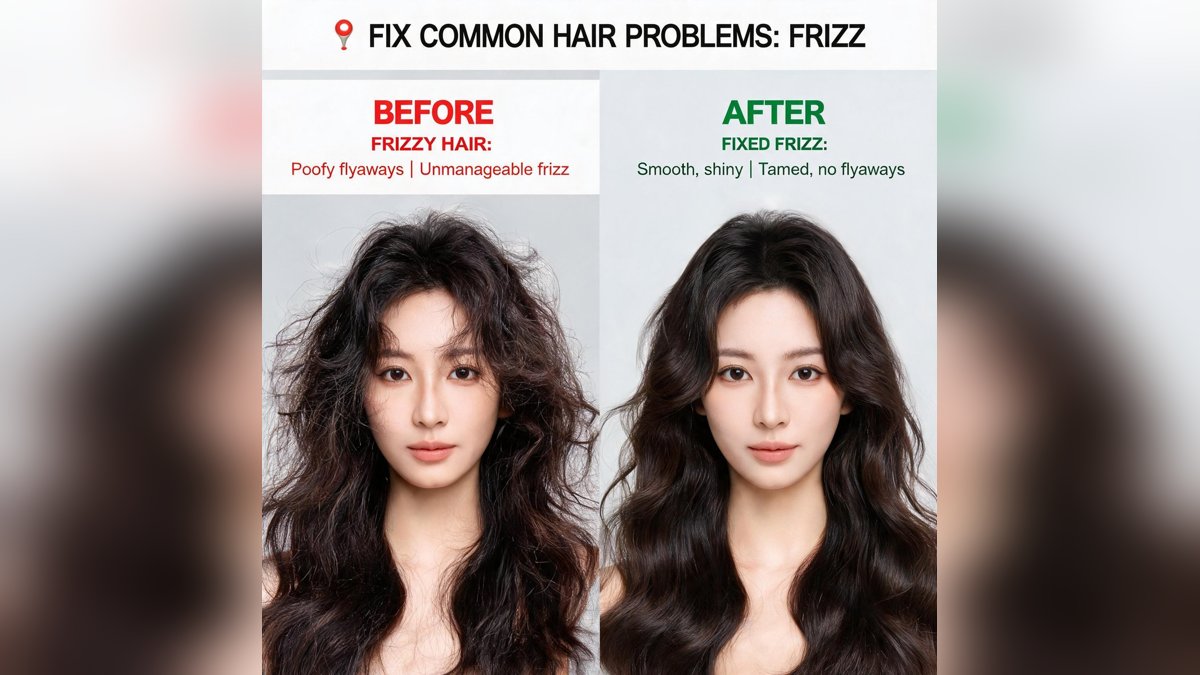
Frizz happens when the hair cuticle — the outermost layer of each strand — is raised or damaged, allowing moisture from the air to penetrate the hair shaft. The absorbed moisture causes the hair to swell and bend irregularly, creating the fuzzy, unruly texture that defines frizz. People with naturally curly or wavy hair experience more frizz because the natural bends in the hair create points where the cuticle is more likely to lift.
Root causes of frizz: Humidity and moisture in the air are the primary environmental triggers, but the underlying condition is cuticle damage from heat styling, chemical processing, rough towel drying, brushing dry curly hair, and sleeping on cotton pillowcases. Low porosity hair is less prone to frizz because the tight cuticle resists moisture penetration, while high porosity hair is most vulnerable.
Immediate solutions: Anti-frizz serums and creams containing silicones (dimethicone, cyclomethicone) coat the hair shaft and seal the cuticle, preventing moisture from entering. Apply to damp hair before styling and use a small amount on dry hair for touch-ups. Oils like argan, jojoba, and grapeseed provide similar sealing effects with a more natural profile. For curly hair, leave-in conditioners and curl creams with humectants (glycerin, aloe) balance moisture without weighing down curls.
Long-term prevention: Switch to a microfiber towel or an old cotton t-shirt for drying — regular bath towels create friction that lifts the cuticle. Sleep on a silk or satin pillowcase to reduce overnight friction. Use a wide-tooth comb instead of a brush on wet hair. Limit heat styling and always use a heat protectant. Deep condition weekly to maintain cuticle health.
Identifying and Preventing Breakage
Breakage occurs when the hair shaft snaps, typically at weak points where the cuticle has been compromised. Unlike shedding (which involves the entire follicle and root), breakage leaves short, broken strands that create a frizzy halo around the crown and noticeable thinning at the ends.
Root causes of breakage: Mechanical damage from aggressive brushing, especially on wet hair when the hair is at its weakest. Hair elastics with metal pieces or tight ponytails that stress the same spot repeatedly. Heat styling that denatures the protein structure. Chemical treatments (bleach, relaxers, perms) that break down the hair's internal bonds. And nutritional factors like low protein intake, iron deficiency, and insufficient biotin.
Products and ingredients for breakage: Protein treatments are the most effective tool for breakage-prone hair. Look for hydrolyzed keratin, collagen, rice protein, wheat protein, and silk protein in deep conditioning masks. Use a protein treatment every 2 to 4 weeks and alternate with moisturizing masks. Bond repair products containing ingredients like bis-aminopropyl diglycol dimaleate work at the molecular level to reconnect broken disulfide bonds. Daily leave-in treatments with panthenol and amino acids provide ongoing protection.
Prevention habits: Detangle hair gently with a wide-tooth comb starting from the ends and working upward, never from the root down. Always detangle conditioning hair while the conditioner is still in — the slip reduces friction. Use protective hairstyles (braids, buns, twists) during sleep and exercise. Avoid tight hairstyles that pull at the hairline and temples. Trim every 8 to 12 weeks to remove weak ends before they break.
"Most breakage is mechanical, not chemical. People blame their products when the real culprit is how they handle their hair — aggressive towel drying, brushing from the root down, sleeping on cotton pillowcases, and using rubber hair ties. Fix the mechanics first, then look at products. You cannot product your way out of bad habits."
Split Ends: Treatment vs. Trimming
Split ends, or trichoptilosis, occur when the protective cuticle wears away from the tip of the hair shaft, causing the inner cortex to fray and split into two or more pieces. Once the split begins, it can travel up the shaft, turning a manageable 1-millimeter split into several inches of frayed, damaged hair.
Types of split ends: The basic Y-split is the most common and easiest to trim. Feathering splits involve multiple tiny splits at the tip, often caused by heat damage. The knot (trichonodosis) occurs when hair ties in a knot on itself and splits at the stress point. The taper or tree split happens when the hair becomes progressively thinner toward the end before splitting into multiple branches.
Can you repair split ends? The honest answer is no — once the hair shaft has physically split, no product can permanently fuse it back together. Products labeled "split end repair" work by temporarily gluing the split ends together with polymers or coating them with silicones. These provide cosmetic improvement until your next shampoo. They are a useful temporary solution but not a replacement for trimming.
When to trim vs. treat: If you have visible split ends, trim them. Trying to treat splits that have already formed only delays the inevitable and allows the splits to travel further. Once split ends are removed, use preventive measures. If your ends feel rough but do not have visible splits, a deep conditioning treatment may restore smoothness. The dusting method — trimming only individual split ends rather than cutting all the ends evenly — allows you to maintain length while removing damage.
Daily Habits That Prevent All Three Problems
The most effective approach to frizz, breakage, and split ends is prevention. These daily habits address all three at once.
Gentle washing: Shampoo only the scalp and let the suds run through the ends — rubbing shampoo directly onto the ends strips natural oils and dries out the cuticle. Condition from mid-length to ends and leave on for 2 to 3 minutes. Rinse with cool water to close the cuticle.
Drying technique: Squeeze excess water from hair gently — do not rub or wring. Wrap in a microfiber towel or cotton t-shirt for 10 to 15 minutes to absorb moisture without friction. Air dry whenever possible. If using a blow-dryer, keep it on medium heat and move it constantly to avoid concentrating heat on one section.
Sleep protection: Silk or satin pillowcases reduce friction by 40 percent compared to cotton. Pineapple-style loose ponytails (for curly hair) or loose braids (for straight to wavy hair) prevent tangling overnight. A silk bonnet or scarf provides even more protection.
Regular trims: Schedule a trim every 8 to 12 weeks. Even a quarter-inch trim removes the most vulnerable ends before they develop into major problems. For healthy hair maintenance, see our complete hair type and porosity guide to understand your hair's specific needs. For ingredient cross-referencing, check how to read skincare ingredient labels like a pro.
Frequently Asked Questions
Common concerns about fixing hair problems
Can split ends be repaired without cutting?
Once the hair shaft has split, there is no product that can permanently fuse it back together. Products labeled 'split end repair' work by temporarily gluing the split ends together with polymers or sealing them with silicones. These effects last until your next wash. The only permanent solution is a trim. However, using split end sealers between trims can prevent the split from traveling further up the shaft and causing more breakage.
What causes frizz and how do I stop it?
Frizz occurs when the hair cuticle is raised or damaged, allowing moisture from the air to enter the shaft and swell the strands, causing them to bend and curl irregularly. The most effective solution combines smoothing products (silicones, oils) that seal the cuticle, anti-humectant ingredients that block moisture absorption, and proper styling techniques. Silk or satin pillowcases, microfiber towels, and avoiding high heat all reduce frizz significantly.
Why is my hair breaking off at the ends?
Breakage at the ends is usually caused by cumulative mechanical damage — brushing too aggressively, using elastics with metal parts, sleeping on cotton pillowcases, and repeated heat styling. Chemical damage from coloring, bleaching, or relaxing weakens the protein structure, making ends more prone to snapping. The solution involves protein treatments to strengthen the shaft, regular trims every 6 to 8 weeks, protective hairstyles, and switching to gentle hair accessories.
How often should I trim my hair to prevent split ends?
Most hair types benefit from a trim every 8 to 12 weeks to keep split ends at bay. If you use heat styling regularly, color your hair, or have fine hair that is more prone to damage, trim every 6 to 8 weeks. If you avoid heat, use protective styles, and have healthy hair, you can stretch to 10 to 12 weeks. The dusting method — trimming only the very ends where splits are visible — can extend time between significant trims.
Does brushing hair 100 strokes a day help or hurt?
The old advice of 100 strokes a day is outdated and harmful for most hair types. Excessive brushing causes friction that strips the cuticle, leading to frizz, breakage, and split ends. The only hair type that may benefit from frequent brushing is Type 1 (straight) hair, which needs regular stimulation to distribute oils. For all other types, brush only enough to detangle — once or twice daily with a wide-tooth comb or gentle bristle brush, starting from the ends and working up.
Related Articles
Your Next Step
Identify which of the three problems — frizz, breakage, or split ends — affects your hair most. Start with the simplest fix: switch to a microfiber towel and silk pillowcase this week. If frizz is your main issue, add an anti-frizz serum to your routine. If breakage, schedule a protein treatment. If split ends, book a trim and commit to a regular 8-week trimming schedule.
Most improvements in hair texture and strength come from changing daily habits, not buying expensive products. Focus on gentle handling, protective sleep habits, and consistent trims. For more haircare guidance, explore our All Articles.