Table of Contents
Key Takeaways
- The morning routine focuses on protection — cleanse, antioxidant serum, moisturizer, and SPF
- The evening routine focuses on repair — double cleanse, treatment products like retinol, and richer moisturizer
- Both routines share the same core structure: cleanse, treat, moisturize — only the products and order shift
- Vitamin C belongs in the morning; retinol and exfoliants belong at night
- Sunscreen is the only step that is truly non-negotiable in the morning and never needed at night
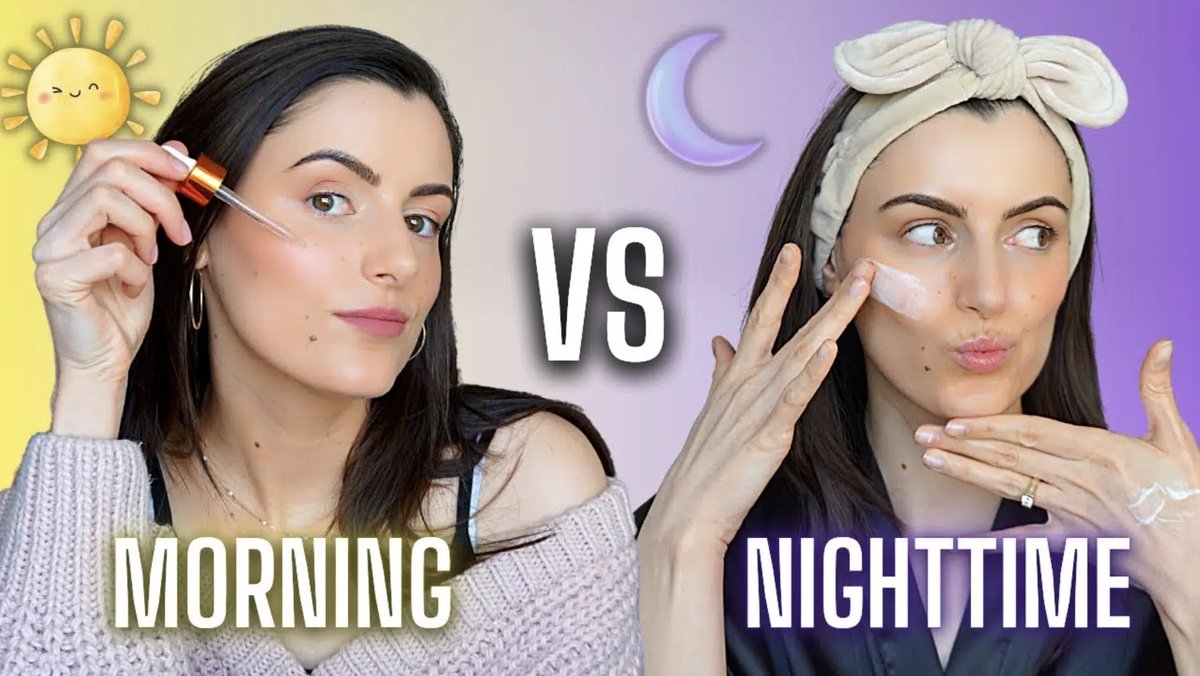
Many people assume that morning and evening skincare routines should look identical. In reality, your skin has very different needs depending on the time of day. In the morning, the goal is to protect your skin from environmental stressors. At night, the priority shifts to repair and recovery while your skin enters its natural regeneration cycle.
Understanding the difference between AM and PM skincare is the key to getting the most out of every product you use. Using the right ingredient at the wrong time of day can reduce its effectiveness or even cause irritation. This guide breaks down what changes between your two daily routines and what stays consistent.
The Morning Routine: Protection First
Your morning skincare routine exists to defend your skin against UV radiation, pollution, and oxidative stress. After a night of repair, your skin barrier is at its most receptive in the morning, making it the ideal time to apply protective and antioxidant ingredients.
The standard AM routine follows five steps: cleanse, tone, antioxidant serum, moisturize, and SPF. Each step builds on the previous one, with SPF as the final and most important layer. Skipping any step before SPF reduces the effectiveness of your sunscreen because the skin needs to be properly prepped for even application and maximum adherence. For more on choosing the right products, see our cleanser guide for every skin type and sunscreen science explained.
Cleansing in the Morning
Morning cleansing does not need to be aggressive. Your skin has not accumulated makeup, sunscreen, or environmental debris overnight — just a light layer of sebum and residue from your night products. For dry and sensitive skin, splashing with lukewarm water or using a gentle micellar water is sufficient. Oily and combination skin benefits from a mild gel or foaming cleanser to remove excess oil.
The Role of Antioxidants in the AM
Vitamin C is the star ingredient of any morning routine. It neutralizes free radicals generated by UV exposure and pollution, brightens the complexion, and supports collagen production. Applied before sunscreen, vitamin C has been shown to boost SPF protection by neutralizing free radicals that sunscreen alone cannot block. Other beneficial morning antioxidants include vitamin E, ferulic acid, and niacinamide.
"The synergy between vitamin C and sunscreen is one of the most well-documented interactions in dermatology. Vitamin C neutralizes free radicals that form after UV exposure, while sunscreen prevents the initial UV damage. Together, they provide significantly more protection than either product alone."
The Evening Routine: Repair Mode
While you sleep, your skin enters a heightened state of regeneration. Blood flow increases, cell turnover accelerates, and the skin barrier repairs itself from daytime damage. The evening routine is designed to support this natural process by thoroughly cleansing away the day's buildup and applying active ingredients that work best without UV interference.
The standard PM routine has four core steps: double cleanse, tone, treatment, and richer moisturizer. The key difference from the morning is the introduction of treatment products such as retinol, exfoliants, and targeted serums that would be ineffective or irritating if used during the day.
Double Cleansing in the Evening
Double cleansing is the most effective way to remove sunscreen, makeup, and daily grime. Start with an oil-based cleanser or cleansing balm to dissolve oil-based impurities. Follow with a water-based cleanser to remove sweat and any residue from the first step. This two-step method ensures your skin is thoroughly clean without the need for harsh rubbing or multiple passes with a cleanser.
Evening Treatments: Retinol and Exfoliants
Retinol is the most researched anti-ingredient in dermatology, proven to stimulate collagen production, accelerate cell turnover, and reduce fine lines and hyperpigmentation. Because retinol increases photosensitivity and degrades in sunlight, it belongs exclusively in the evening routine. Start with a low concentration once per week and gradually increase frequency. Chemical exfoliants such as glycolic acid and salicylic acid also belong at night, applied 2 to 3 times per week on non-retinol evenings. For how to choose the right treatment, see our moisturizer guide for pairing with active ingredients.
| Step | AM Routine | PM Routine |
|---|---|---|
| Cleanse | Water or gentle cleanser | Oil cleanser + water-based cleanser |
| Tone | Hydrating toner | Hydrating or exfoliating toner |
| Treatment | Vitamin C antioxidant serum | Retinol or chemical exfoliant |
| Moisturize | Lightweight gel or lotion | Richer night cream |
| Final Step | SPF 30+ broad-spectrum | Eye cream (optional) |
What Stays the Same in Both Routines
Despite the differences, several elements remain constant between your AM and PM routines. Toner appears in both — though you may choose a hydrating toner for both or swap in an exfoliating toner 2 to 3 evenings per week. Moisturizer is always the final step before SPF in the morning and the final step of the evening routine (excluding eye cream). The thinnest-to-thickest layering rule applies at both times of day. And the most important constant is consistency — a simple routine done twice daily outperforms a complex routine that you only do sporadically.
Common Mistakes Between AM and PM Routines
The most frequent mistake people make is using the same products for both routines without considering timing. Retinol used in the morning causes irritation and degrades quickly. Vitamin C used at night is less effective because the antioxidant protection is needed during daylight hours.
Another common error is over-cleansing in the morning. Using a foaming cleanser designed for deep evening cleansing can strip the morning skin of its natural moisture, leading to tightness and increased oil production throughout the day. Save strong cleansers for the evening and use a gentle or water-only cleanse in the morning.
Skipping moisturizer in the morning because you plan to apply SPF is also a mistake. SPF absorbs better and lasts longer when applied over a well-moisturized base. If your moisturizer and sunscreen do not layer well together, wait two to three minutes between applications rather than skipping either step.
Frequently Asked Questions
Common questions about managing morning and evening routines
Can I use the same moisturizer for morning and night?
You can use the same moisturizer for both, but using separate formulas is beneficial. Day moisturizers should be lightweight and sit well under sunscreen and makeup. Night moisturizers can be richer and contain reparative ingredients like peptides, ceramides, or bakuchiol that support the skin's overnight repair cycle. If you prefer one moisturizer, choose a medium-weight formula and adjust the amount you apply.
Is it bad to skip the morning cleanse?
Skipping the morning cleanse is fine for dry and sensitive skin types, which benefit from preserving overnight sebum. For oily and acne-prone skin, a gentle morning cleanse removes excess oil and sweat accumulated during sleep. At minimum, rinse your face with lukewarm water or use a micellar water if your skin feels tight after cleansing.
How long should I wait between applying AM and PM products?
Wait 30 to 60 seconds between each product layer to allow absorption. After applying retinol or prescription treatments in the evening, wait 15 to 20 minutes before applying your night moisturizer. This waiting period prevents the moisturizer from diluting the active ingredients and reduces the risk of irritation.
Do I need eye cream in both my morning and evening routine?
Eye cream is optional but can be used in both routines if your eye area has specific concerns. Use a caffeine-based eye cream in the morning to reduce puffiness and dark circles. In the evening, use a richer eye cream with peptides or ceramides to support the delicate eye area overnight. Apply with your ring finger using gentle tapping motions.
What happens if I apply retinol in the morning?
Applying retinol in the morning is not recommended because retinol makes your skin more photosensitive, increasing the risk of sunburn and irritation when exposed to UV light. Additionally, retinol degrades rapidly when exposed to sunlight, making it ineffective. Always use retinol and other vitamin A derivatives in your evening routine only.
Related Articles
Your Next Step
The simplest way to optimize your routines is to remember the two-word rule: protect in the AM, repair in the PM. In the morning, focus on gentle cleansing, antioxidants, lightweight moisture, and SPF. In the evening, focus on thorough cleansing, targeted treatments, and richer moisture. Keep the core structure the same and swap only the products that serve each time of day.
If you currently use the same routine morning and night, start by adding SPF to your morning routine and moving retinol or exfoliants to the evening. For more details, read about the correct order to layer products and explore how to choose the right moisturizer for each routine.