Table of Contents
Key Takeaways
- Hyperpigmentation (flat marks) responds well to topical treatments like azelaic acid, vitamin C, and retinoids, while true textural scars typically require professional procedures
- Daily SPF 50 is non-negotiable when treating acne marks — sun exposure directly darkens hyperpigmentation and degrades the collagen needed for scar repair
- Microneedling, chemical peels, and fractional laser resurfacing are the most effective professional treatments for atrophic acne scars, typically requiring 3 to 6 sessions
- Ice pick scars respond best to punch excision or TCA cross, while boxcar and rolling scars improve with collagen-stimulating procedures like microneedling and subcision
- Preventing new scars through early acne treatment and avoiding picking is more effective than treating established scars — hydrocolloid patches help break the picking habit
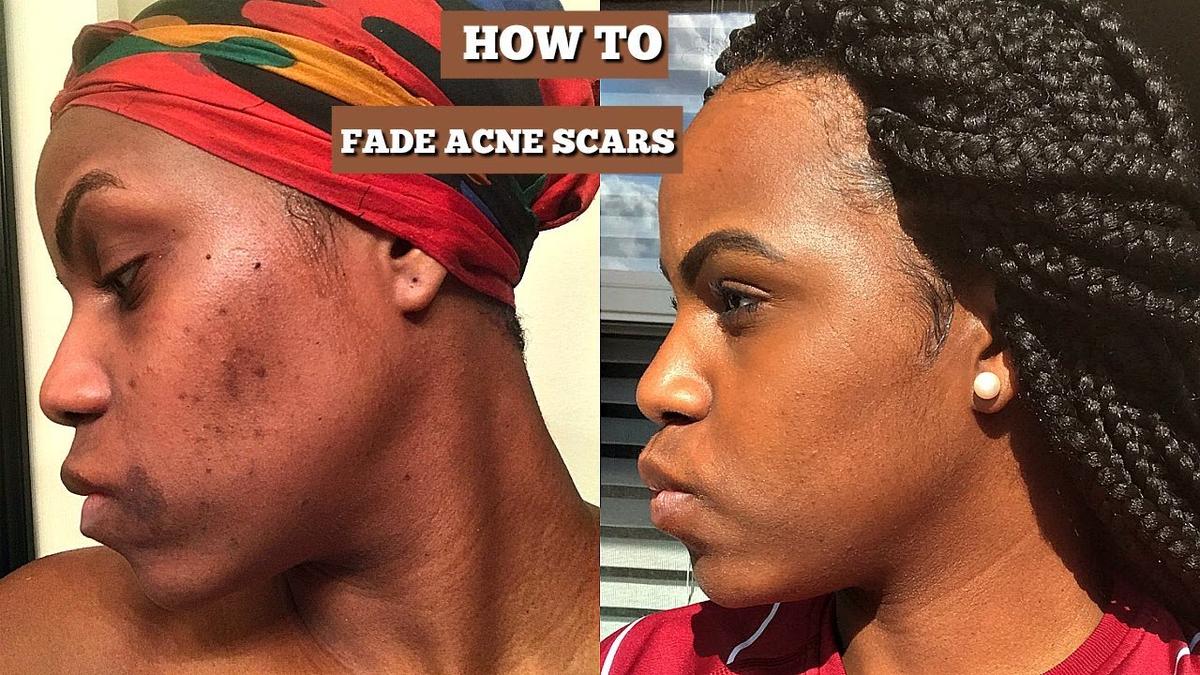
One of the most frustrating aspects of acne is that the marks and scars can last long after the pimples themselves have healed. Post-inflammatory hyperpigmentation — the flat red, brown, or purple marks left behind by healed breakouts — can persist for months. Atrophic scars, the pitted depressions that form when the skin does not regenerate properly after deep inflammation, are permanent without professional treatment.
Treating acne scars and hyperpigmentation requires a different approach than treating active acne. The goal shifts from preventing new lesions to stimulating repair in damaged tissue. This guide covers dermatologist-backed methods for fading discoloration and improving scar texture, from topical ingredients to in-office procedures.
Understanding Hyperpigmentation vs. True Scarring
The first step in treating post-acne marks is understanding whether you are dealing with hyperpigmentation or true scarring. Hyperpigmentation is a flat discoloration of the skin without any textural change. It occurs when inflammation stimulates melanocytes to produce excess melanin (brown marks) or when damaged blood vessels cause persistent redness (red or purple marks). Hyperpigmentation is superficial and responds well to topical treatments.
True acne scars, on the other hand, involve changes in the skin texture. Ice pick scars are narrow, deep pits that look like small punctures in the skin. They form when a deep inflammatory lesion destroys collagen in a localized area, causing the skin above to sink inward. Boxcar scars are broader depressions with sharp, well-defined edges, resembling chickenpox scars. Rolling scars have gentle, wave-like depressions with sloping edges caused by fibrous bands that tether the skin down to deeper tissue.
Distinguishing between these types matters because each responds to different treatments. Hyperpigmentation can be improved with topical ingredients and chemical peels. Ice pick scars require precise procedures like punch excision or TCA cross. Boxcar and rolling scars respond best to treatments that stimulate collagen remodeling, such as microneedling and laser resurfacing.
The age of the mark is also important. Fresh red marks that are less than 6 months old have a good chance of fading on their own with diligent sun protection. Old brown marks and established textural scars require active intervention to improve. Sun exposure dramatically slows the healing of both hyperpigmentation and scars, making daily SPF 30 or higher the single most important step in any scar treatment plan.
Topical Ingredients for Fading Marks
Several topical ingredients have strong evidence for treating post-inflammatory hyperpigmentation. Hydroquinone has been the gold standard for decades, though concerns about long-term safety have made it less popular. It works by inhibiting the enzyme tyrosinase, which is necessary for melanin production. In the United States, hydroquinone is available over the counter at 2 percent and by prescription at 4 percent. Treatment should be limited to 3 to 4 months at a time to prevent side effects.
Azelaic acid is an excellent alternative to hydroquinone with a strong safety profile. At 15 to 20 percent concentration, it effectively reduces melanin production and has the added benefit of treating active acne at the same time. It is particularly useful for people with darker skin tones because it carries minimal risk of further discoloration. Results become visible after 8 to 12 weeks of twice-daily application.
Vitamin C (L-ascorbic acid) brightens hyperpigmentation and protects against future discoloration through its antioxidant activity. It works by interrupting the melanin production pathway at multiple points and by neutralizing the free radicals that trigger inflammation. The most effective formulations contain 10 to 20 percent L-ascorbic acid at a pH below 3.5, stored in opaque, airtight packaging to prevent oxidation. Consistent daily use for 3 to 6 months produces noticeable lightening of dark marks.
Retinoids speed up the fading of hyperpigmentation by accelerating cell turnover, pushing pigmented cells to the surface where they shed naturally. Tretinoin 0.05 percent cream has FDA approval for treating hyperpigmentation. Adapalene is a gentler OTC alternative. Neither should be used during pregnancy. For textural scars, retinoids stimulate collagen production over 6 to 12 months of consistent use, gradually improving the appearance of shallow boxcar and rolling scars.
"The single biggest mistake people make when treating acne marks is not using sunscreen. Sun exposure directly darkens hyperpigmentation through UV-stimulated melanin production and degrades the collagen needed to repair textural scars. A broad-spectrum SPF 50 applied every morning is not optional when you are trying to fade acne marks — it is the foundation that determines whether everything else you do actually works."
Professional Procedures for Scar Treatment
When topical treatments reach their limit, in-office procedures offer the most dramatic improvements for acne scars. Microneedling uses a device with fine needles that create controlled micro-injuries in the skin. This stimulates the body's natural wound healing response, triggering collagen and elastin production that fills in depressed scars over time. A series of 3 to 6 treatments spaced 4 to 6 weeks apart is typically needed. Results continue to improve for 6 to 12 months after the last session as new collagen matures.
Chemical peels use acid solutions to remove the outer layers of skin, stimulating regeneration of new, evenly pigmented skin. Superficial peels with glycolic acid or salicylic acid help with hyperpigmentation and surface texture. Deeper peels with trichloroacetic acid provide more dramatic results for scar remodeling but require longer recovery. Medium-depth peels are typically performed in a series of 3 to 5 sessions at 3 to 6 week intervals.
Laser treatments offer the most targeted approach to scar revision. Fractional resurfacing lasers create microscopic columns of thermal injury in the skin, stimulating collagen production while leaving surrounding tissue intact for rapid healing. Non-ablative fractional lasers have minimal downtime and work well for mild to moderate scarring. Ablative fractional lasers produce more dramatic results but require 1 to 2 weeks of recovery. Vascular lasers specifically target the red blood vessels in persistent erythema, helping red marks fade faster.
Punch techniques are the most effective treatment for deep ice pick scars. A small circular tool punches out the individual scar, and the defect is closed with a suture or filled with a skin graft. The resulting scar from the procedure is typically less noticeable than the original acne scar. Subcision involves inserting a needle under rolling scars to release the fibrous bands that tether the skin down, allowing the depressed area to lift. For a full understanding of how to prevent new scars, see our guide to identifying and treating acne types early.
Preventing New Scars While Treating Old Ones
Treating existing scars is only half the equation. Preventing new scars from forming is equally important. The most effective prevention strategy is treating active acne aggressively to reduce the depth and duration of inflammation. A pimple that resolves in 3 days causes far less tissue damage than one that lingers for 3 weeks. Using benzoyl peroxide or a retinoid to speed resolution of individual lesions directly reduces scarring risk.
Picking and squeezing is the single most preventable cause of acne scarring. Each time you manipulate a pimple, you increase inflammation and push bacteria deeper into the skin, converting a surface lesion into a deep one that is much more likely to scar. Hydrocolloid patches are an effective tool for preventing picking — they cover the lesion, absorb drainage, and create a physical barrier that keeps your hands away. Combining scar prevention with a proper acne-safe routine enhances overall results. See our complete guide to building an acne-safe skincare routine.
Frequently Asked Questions
Common concerns about treating acne scars and post-acne marks
Can acne scars go away completely with treatment?
Hyperpigmentation can fade completely with consistent use of topical treatments and sun protection over 3 to 12 months. True textural scars (ice pick, boxcar, rolling) rarely disappear completely but can improve significantly — often 50 to 80 percent — with a combination of professional procedures like microneedling, laser resurfacing, and chemical peels. The goal is substantial improvement rather than complete eradication.
Frequently Asked Questions
Common concerns about treating acne scars and post-acne marks
Can acne scars go away completely with treatment?
Hyperpigmentation can fade completely with consistent use of topical treatments and sun protection over 3 to 12 months. True textural scars (ice pick, boxcar, rolling) rarely disappear completely but can improve significantly — often 50 to 80 percent — with a combination of professional procedures like microneedling, laser resurfacing, and chemical peels. The goal is substantial improvement rather than complete eradication.
How long does it take for red marks from acne to fade?
Red marks (post-inflammatory erythema) typically take 3 to 12 months to fade on their own. Using niacinamide, azelaic acid, and consistent SPF 50 can speed this process to 2 to 4 months. Red marks that persist beyond 12 months without improvement may have a permanent vascular component and could benefit from vascular laser treatment.
Is microneedling at home safe for acne scars?
At-home microneedling devices with needle lengths under 0.5 mm are generally safe for improving product absorption but will not produce meaningful results for acne scars. Professional microneedling with needles of 1.5 to 2.5 mm performed by a licensed provider is needed to stimulate enough collagen to fill depressed scars. At-home devices also carry infection risk if not properly sterilized.
Do dark spots from acne mean I have permanent scarring?
No. Dark spots are post-inflammatory hyperpigmentation, which is a flat discoloration without textural change. Unlike true scars that involve tissue loss, hyperpigmentation is surface-level and reversible. Most dark spots fade significantly within 3 to 12 months with sun protection and targeted topical ingredients like vitamin C, azelaic acid, or retinoids. Only textural depressions or raised scars indicate permanent tissue change.
What is the best sunscreen for acne-prone skin with scars?
Look for oil-free, non-comedogenic sunscreens with zinc oxide or titanium dioxide as the main active ingredients. Mineral sunscreens are generally better tolerated by acne-prone skin than chemical sunscreens. SPF 50 or higher is recommended for scar treatment. Tinted mineral sunscreens containing iron oxides provide additional protection against visible light, which can also darken hyperpigmentation.
Related Articles
Your Next Step
Start by determining whether your marks are flat hyperpigmentation or true textural scars. Flat marks can be treated at home with azelaic acid, vitamin C, and consistent SPF 50. For textural scars, schedule a consultation with a dermatologist to assess your scar types and discuss procedural options like microneedling, chemical peels, or laser treatment.
Regardless of which treatment path you choose, daily SPF 50 is mandatory. Sun exposure directly darkens hyperpigmentation and degrades the collagen your skin needs to repair textural scars. The best treatment in the world will not produce results if you are not protecting your skin from UV damage every single day.