Table of Contents
Key Takeaways
- Healthy nails reflect overall wellness — brittle nails often signal nutritional gaps, dehydration, or repeated environmental damage
- Biotin (2.5 mg daily) and keratin-based treatments have the strongest clinical evidence for improving nail thickness and reducing breakage
- Cuticle care is essential for nail health because the cuticle seals the nail plate from bacteria and moisture loss
- Dietary protein, zinc, iron, and silica support nail keratin production faster than any topical product alone
- Nail hardeners and strengtheners work differently — hardeners make nails rigid (can cause breakage), while strengtheners add flexible reinforcement
Brittle, peeling, or splitting nails are frustrating. They snag on clothing, break at inconvenient moments, and can make even simple tasks like typing or buttoning a shirt uncomfortable. Many people assume weak nails are just genetic bad luck, but nail health is far more responsive to care and nutrition than most realize.
Nails are not just dead tissue at the tips of your fingers. They are complex structures that reflect your overall health, nutritional status, and daily habits. Understanding how nails grow, what weakens them, and which interventions actually work can transform nails from fragile to resilient within a few growth cycles.
Understanding Nail Anatomy and Growth
Each fingernail grows from the nail matrix, a specialized area of living tissue located under the cuticle at the base of the nail. The matrix produces keratinocytes, cells that fill with keratin protein and harden as they push forward to form the visible nail plate. A fingernail takes about 6 months to grow from matrix to fingertip, while toenails take 12 to 18 months.
The nail plate sits on the nail bed, a rich network of blood vessels that give nails their pink color. The cuticle, or eponychium, seals the gap between the nail plate and the surrounding skin, preventing bacteria, fungi, and moisture from entering the matrix area. The lunula, the white half-moon shape at the base, is the visible part of the matrix.
Factors that slow nail growth include aging, poor circulation, certain medications, and nutritional deficiencies. Factors that accelerate growth include pregnancy, increased blood flow from exercise, and biotin supplementation. Nails grow faster in summer than winter, and faster on your dominant hand due to increased blood flow from more frequent use.
Common Nail Problems and Their Causes
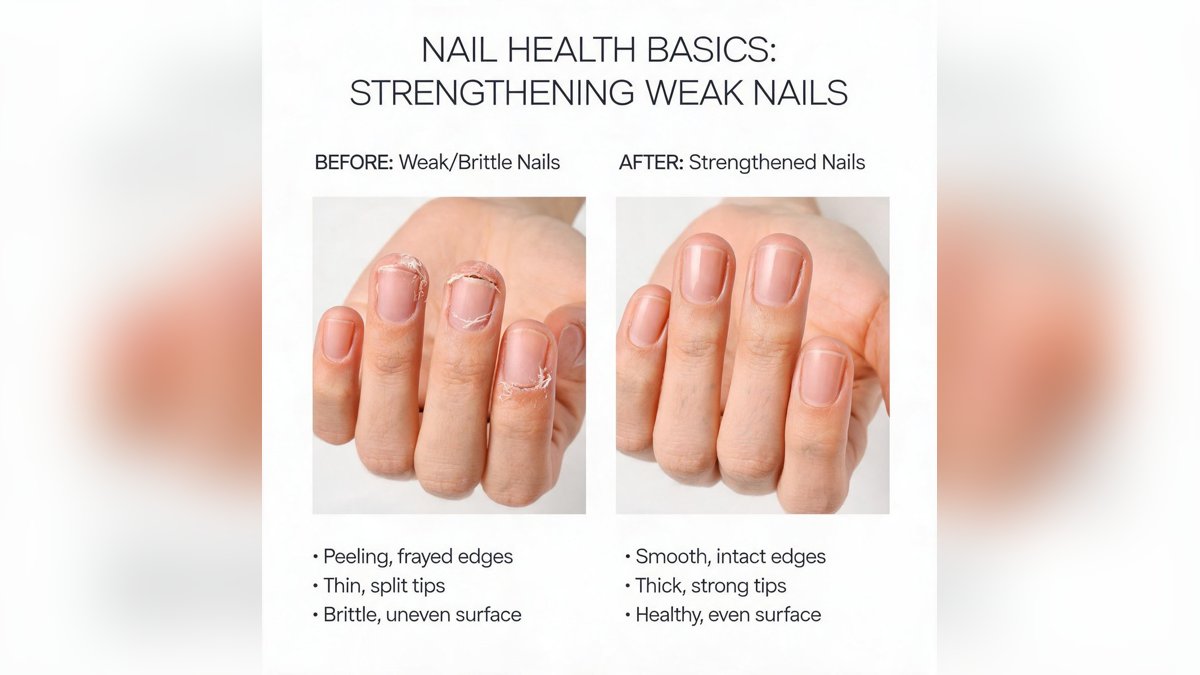
Brittle nails, or onychoschizia, present as peeling, splitting, or flaking at the free edge. The primary cause is repeated wetting and drying. Each time nails absorb water they expand, and when they dry they contract. Over hundreds of cycles, this repeated expansion and contraction weakens the intercellular cement that holds keratin layers together. Dishwashers, hairdressers, and swimmers are particularly prone to this condition.
Soft and thin nails bend easily and may tear before they reach the free edge. This often results from overexposure to acetone-based removers, frequent gel manicure applications, or genetic factors. Soft nails can also indicate thyroid dysfunction or biotin deficiency.
Vertical ridges, or onychorrhexis, run from cuticle to tip and become more common with age. They are generally harmless and reflect reduced blood flow to the matrix over time. Deep horizontal ridges, called Beau's lines, are more concerning and can indicate a serious illness, high fever, or chemotherapy episode that occurred months earlier.
White spots, or leukonychia, are most often caused by minor trauma to the nail matrix, such as bumping your finger against a surface. They grow out with the nail over several months and are rarely related to zinc or calcium deficiency as commonly believed.
"Most nail problems are caused by what we do to our nails rather than internal disease. Repeated water exposure, harsh removers, and physical trauma account for over 80 percent of brittle nail cases seen in dermatology. Before looking for a medical cause, look at your habits."
Evidence-Based Nail Strengthening
The strongest clinical evidence supports biotin supplementation for nail strengthening. A double-blind study published in the Journal of the American Academy of Dermatology found that 2.5 mg of biotin daily for 6 months increased nail thickness by 25 percent in participants with brittle nails. Biotin works by improving the body's keratin infrastructure, making each nail cell more resistant to splitting.
Topical Treatments That Work
Keratin-based nail treatments deposit a protective layer of hydrolyzed keratin protein onto the nail surface, filling gaps in the nail plate and preventing further splitting. These are most effective when applied daily for 2 to 4 weeks, then tapered to 2 to 3 times per week for maintenance. Look for ingredients like hydrolyzed keratin, collagen, and silk protein rather than formaldehyde-based hardeners.
Nail oils containing jojoba oil, vitamin E, and essential fatty acids penetrate the nail plate and improve flexibility. Jojoba oil is structurally similar to sebum, the skin's natural oil, making it the most effective carrier for nail and cuticle hydration. Apply cuticle oil twice daily, especially after hand washing.
Dietary Support for Nail Health
Nails require adequate protein because they are made of keratin. Low protein intake directly impairs nail quality. Iron deficiency is strongly linked to brittle, spoon-shaped nails, so include iron-rich foods like spinach, lentils, and red meat. Zinc supports cell division in the nail matrix, and deficiency shows as white spots and slow growth.
Silica, found in oats, cucumbers, bell peppers, and bananas, supports collagen production and nail structure. Omega-3 fatty acids from fish, flaxseed, and walnuts reduce inflammation around the nail folds and improve cuticle health. A multivitamin covering these bases can help, but targeted food sources are more effective.
Nail Hardener vs. Strengthener Decision Guide
| Feature | Nail Hardener | Nail Strengthener |
|---|---|---|
| How it works | Cross-links keratin with formaldehyde | Deposits flexible polymers or keratin |
| Nail feel | Rigid, hard, inflexible | Flexible, reinforced but bendable |
| Best for | Very soft, overly flexible nails | Most brittle, peeling, or thin nails |
| Risk | Can cause snapping breakage | Low — mimics natural nail flexibility |
| Key ingredients | Formaldehyde, formalin | Hydrolyzed keratin, nylon, calcium |
Choose a strengthener for most brittle nail cases. Hardeners should be reserved for nails so soft they bend backward on contact. If you use a hardener, limit application to 2 weeks followed by 1 week break. For more on building healthy habits around personal care, see How to Identify Your Acne Type and Choose the Right Treatment Plan.
Daily Nail Care Routine
Keep nails dry and clean. Wear gloves when washing dishes or using cleaning products. File nails in one direction rather than sawing back and forth, which creates micro-fractures in the nail plate. Use a glass file rather than emery boards, which are too abrasive. Keep nails at a moderate length — very long nails are mechanically weaker and more prone to trauma.
Moisturize after every hand wash. Apply cuticle oil morning and night. Avoid metal tools under the nail for cleaning — this separates the nail plate from the nail bed and creates a pocket for bacteria. Push cuticles back gently after showering when they are soft, rather than cutting them, which increases infection risk. To build a comprehensive personal care approach, read The Complete Guide to Building an Acne-Safe Skincare Routine.
Frequently Asked Questions
Common questions about strengthening brittle nails and maintaining nail health
What causes brittle nails and how can I tell if it is a health issue?
Brittle nails can result from repeated wet-dry cycles (washing dishes, swimming), harsh nail polish removers containing acetone, nutritional deficiencies (biotin, iron, zinc, protein), thyroid disorders, or fungal infections. If your nails are brittle on all fingers with no obvious external cause, consult a dermatologist to rule out underlying health conditions. Isolated brittleness on one or two nails is usually external damage rather than an internal issue.
Does biotin really help nails grow stronger?
Clinical studies show that taking 2.5 mg of biotin daily for 3 to 6 months can increase nail thickness by up to 25 percent in people with brittle nails. Biotin supports keratin production, the protein that makes up nail plates. Results take time because nails grow slowly — about 3 mm per month for fingernails. Biotin is water-soluble, so excess is excreted, but always check with your doctor before starting any supplement.
What is the difference between a nail hardener and a nail strengthener?
Nail hardeners contain formaldehyde or similar ingredients that create cross-links between keratin proteins, making the nail rigid and hard. This can actually increase breakage because hard nails snap rather than flex. Nail strengtheners use flexible polymers, keratin, nylon fibers, or calcium to reinforce the nail while allowing natural flexibility. For most brittle nails, a strengthener is safer than a hardener. Reserve hardeners only for extremely soft, flexible nails that bend too easily.
How does diet affect nail strength?
Nails are made of keratin, a protein that requires adequate dietary protein intake for production. Iron deficiency causes spoon-shaped, brittle nails. Zinc deficiency produces white spots and slows growth. Silica (found in oats, cucumbers, and bell peppers) supports nail structure and thickness. Omega-3 fatty acids reduce nail inflammation and cuticle dryness. A balanced diet with sufficient protein, leafy greens, nuts, and seeds provides the raw materials your body needs to build strong nails.
Can nail polish and gel manicures damage nail health permanently?
Occasional nail polish use does not damage nails, but frequent gel manicures with improper removal can cause significant thinning and peeling. The damage comes from soaking in acetone for extended periods and scraping or prying off gel polish, which removes layers of the nail plate. To minimize damage, limit gel manicures to once per month, never pick or peel gel polish off, and give your nails a break for 1 to 2 weeks between gel applications. Use a nail strengthener during breaks.
Related Articles
Your Next Step
Start by examining your current nail care habits. If you remove gel polish by picking or scraping, stop immediately. Switch to an acetone-free remover and limit polish changes to once per week. Add a biotin supplement and increase your protein intake with eggs, lean meat, or plant-based alternatives.
Replace nail hardeners with a flexible strengthener containing keratin or nylon fibers. Moisturize your cuticles with jojoba oil every night before bed. Give your nails a polish-free break for two weeks every month to allow natural recovery. Most nail health improvements become visible within two to three nail growth cycles, or roughly three to four months. Consistency matters more than any single product.