Table of Contents
Key Takeaways
- Store perfumes away from direct sunlight in a dark, cool place between 15 and 21 degrees Celsius
- Keep fragrances in their original boxes to block light and buffer temperature fluctuations
- Citrus-based and fresh fragrances have the shortest shelf life, usually 1 to 3 years
- Avoid bathrooms and windowsills where humidity and UV light accelerate degradation
Fragrances are complex chemical compositions that degrade over time when exposed to unfavorable conditions. Light, heat, humidity, and oxygen each accelerate the breakdown of scent molecules, altering the fragrance you loved into something unrecognizable. Proper storage preserves your investment and keeps your scents smelling as intended for years.
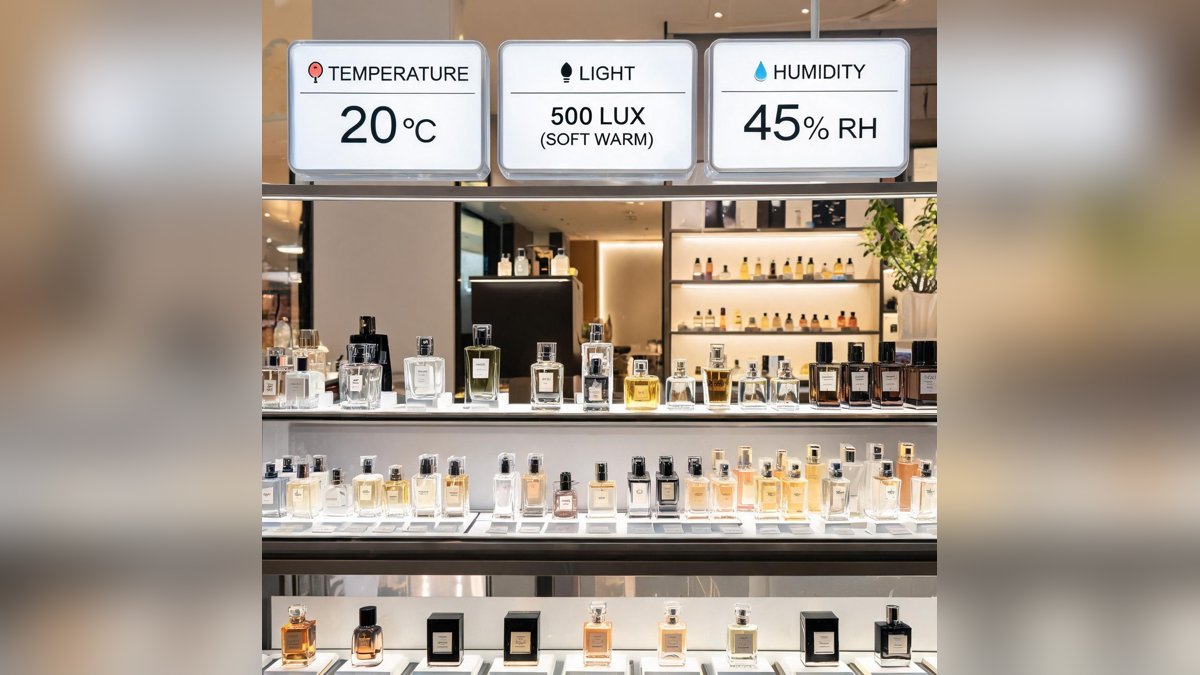
The International Fragrance Association notes that storing fragrances at temperatures above 25 degrees Celsius can cause significant degradation of scent molecules within months. A dark, cool environment between 15 and 21 degrees Celsius is optimal for preserving fragrance integrity and longevity.
Understanding how each environmental factor affects your fragrances allows you to create the ideal storage environment. This guide covers the enemies of fragrance, optimal storage conditions, shelf life expectations, and best practices for travel.
Light, Heat, and Humidity Damage
Three environmental factors destroy fragrances faster than anything else. Ultraviolet light breaks down the molecular bonds in perfume oils, causing color changes and scent degradation within weeks of continuous exposure. Heat accelerates chemical reactions, causing top notes to evaporate prematurely and base notes to turn sour. Humidity introduces water molecules into the bottle, which can alter the scent profile and promote bacterial growth.
Never store perfumes on a windowsill, bathroom counter, or near heating vents. Even indirect sunlight through a window is damaging over time. The bathroom is particularly harmful because of the constant temperature and humidity swings from hot showers and baths.
Optimal Storage Conditions
The ideal storage environment for fragrances is dark, cool, and stable. Keep perfumes at a consistent temperature between 15 and 21 degrees Celsius. A bedroom closet, drawer, or cabinet away from exterior walls meets these criteria. If you have a dedicated dresser or shelf that does not receive direct light, that works well too.
Keep fragrances in their original boxes if possible. The box blocks light and provides insulation against temperature fluctuations. For bottles displayed on a vanity, rotate them regularly so no single bottle sits in the same position for months. Store bottles upright to prevent the liquid from contacting the atomizer seal, which can cause leakage and oxidation.
Shelf Life by Fragrance Type
Not all fragrances age equally. Citrus-forward scents such as Eau de Cologne and fresh aquatics have the shortest shelf life, typically 1 to 3 years. The bright top notes that define these scents are the most volatile and evaporate first. Woody, oriental, and leather-based fragrances last 3 to 5 years or longer because their base notes are made from more stable molecules.
Pure parfum extrait formulations last longest because they contain the highest concentration of stable fragrance oils and the least amount of alcohol and water. However, natural ingredients in any concentration degrade faster than synthetic counterparts. A fragrance heavy in natural citrus oils will expire faster than one made with synthetic citrus molecules.
Signs of Expiration
You can tell a fragrance has expired by several signs. The liquid has darkened significantly from its original color. The scent smells sour, metallic, or alcoholic rather than its original profile. The top notes are barely detectable or completely absent. A sticky residue forms around the bottle neck or atomizer.
Expired fragrance is not harmful to wear, but it will not smell as intended. If the scent has turned unpleasant, dispose of the bottle responsibly. Do not pour it down the drain. Give the remaining liquid to a friend who might enjoy the altered profile, or use it as a room spray for closets and linens.
Travel Storage Tips
Travel presents unique challenges for fragrance storage. Transfer your perfume into travel-sized atomizers that hold 5ml to 10ml. These are TSA-friendly, airtight, and protect the fragrance from pressure changes during flights. Wrap glass bottles in clothing inside your luggage to prevent breakage.
Keep fragrances in your carry-on rather than checked luggage. The cargo hold experiences temperature extremes that can damage scents. Upon arrival, store your travel atomizers in a cool, dark place in your hotel room, away from air conditioning vents and windows. For more on selecting the right fragrances, see perfume concentration guide and niche vs designer fragrances.
Frequently Asked Questions
Common concerns about fragrance storage
Can I store perfume in the refrigerator?
Short-term refrigeration is fine and can even help preserve volatile top notes. However, long-term fridge storage creates condensation inside the bottle when the perfume warms up during use, which introduces water and accelerates degradation.
Does perfume expire if unopened?
Unopened perfume stored properly in a dark, cool place can last 5 to 10 years before noticeable degradation begins. Natural ingredients degrade faster than synthetic ones. Citrus-forward scents are the most perishable.
Why does my perfume smell different than when I bought it?
Heat, light exposure, or oxidation has likely altered the fragrance. Darkened liquid, a sour or alcoholic smell, or missing top notes all indicate degradation. Proper storage prevents this change.
Is it bad to keep perfume in the bathroom?
Yes. Bathrooms experience frequent temperature and humidity swings from showers and baths. This environment accelerates chemical breakdown. Keep perfumes in a bedroom closet or drawer instead.
How should I pack perfume for travel?
Transfer perfume to travel-sized atomizers that are TSA-friendly. Keep them in your carry-on where temperature is controlled. Wrap glass bottles in clothing to prevent breakage. Avoid checking perfumes in luggage if possible.
Related Articles
Your Next Step
Now that you have learned how to store fragrances, check your current collection and move any bottles from bathrooms or windowsills to proper storage.
For more guidance, explore our All Articles.