Table of Contents
Key Takeaways
- Gel systems offer the most natural look and flexible feel but require UV/LED lamp curing and have moderate longevity
- Dip powder provides the longest wear (3-5 weeks) without a lamp but has significant hygiene concerns with shared powder jars
- Acrylics are the strongest and most durable system, ideal for length extension, but have strong odors and the highest potential for damage
- All three systems can damage nails with improper application or removal — technique matters more than the system itself
- Pour-over dip application methods eliminate the contamination risk of traditional dipping and make dip a safer choice
Walking into a nail salon presents an overwhelming choice: gel, dip powder, or acrylics. Each system has passionate advocates, but the right choice depends on your nail type, lifestyle, budget, and priorities. The differences go beyond appearance — application process, wear time, removal difficulty, and long-term nail health implications vary significantly between the three systems.
According to the FDA, improper application and removal of nail enhancements is a leading cause of nail plate damage and contact dermatitis in salon clients. Choosing the right system and ensuring proper technique is critical for maintaining long-term nail health.
The nail enhancement industry has evolved rapidly over the past decade. Gel technology has improved flexibility and reduced curing time. Dip powder has gained popularity for its durability and lack of UV light requirement. Acrylics remain the gold standard for extensions and extreme durability. Understanding the trade-offs helps you choose confidently rather than relying on salon recommendations that may prioritize what the technician prefers rather than what suits your nails.
Gel Nails: Pros, Cons, and Best Use Cases
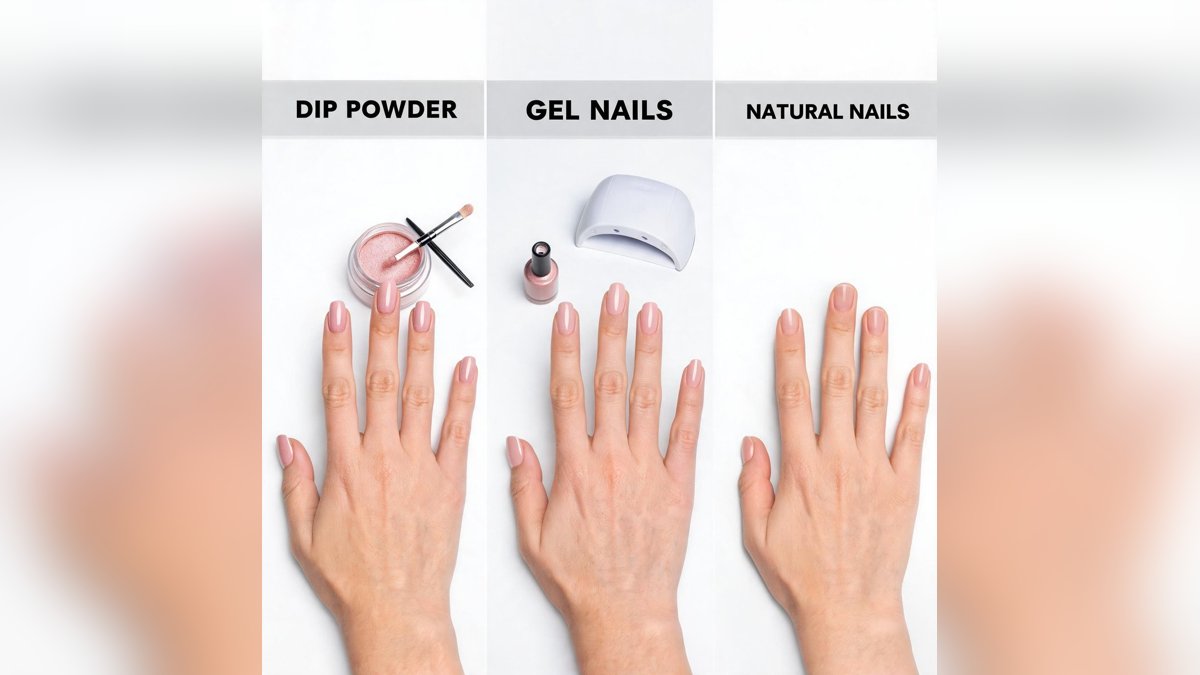
Gel nails use a polymer that hardens under UV or LED light. The cured gel is flexible, glossy, and lightweight. Gel bonds directly to the natural nail plate and flexes with it, reducing trauma from everyday bending and bumping. This flexibility makes gel the most comfortable system for daily wear.
Pros: Gel provides the most natural-looking finish with a high-gloss shine that does not dull over time. Application has minimal odor compared to acrylics. Removal requires only acetone soaking rather than aggressive filing. Gel works well for people with active lifestyles who need nails that bend rather than snap.
Cons: Gel does not provide the same structural strength as acrylics for long extensions. It requires a lamp investment for home use. Some people experience a brief heating sensation during LED curing. Gel is also the most expensive system per wear session if you use salon services, as it requires more frequent fills than dip or acrylic.
Dip Powder: Pros, Cons, and Hygiene Concerns
Dip powder nails involve applying a base coat and dipping the finger into colored acrylic powder, which bonds with the glue-like base. The process repeats for 3 to 4 layers, followed by a sealant top coat. No UV or LED lamp is required, making dip powder the most portable and accessible system.
Pros: Dip powder offers the longest wear time of any system, often lasting 4 weeks without lifting or chips. The application process is fast once learned. Dip powder is lighter and thinner than acrylics while providing comparable strength. Color selection is vast, and the matte or glossy finish options are plentiful.
Cons: The dipping method raises hygiene concerns because sharing powder jars can transfer bacteria between clients. The pour-over method solves this but requires additional skill. Removal requires 15 to 20 minutes of acetone soaking plus filing. Dip powder can be difficult to remove correctly, and improper removal causes significant nail thinning.
| Feature | Gel | Dip Powder | Acrylic |
|---|---|---|---|
| Wear time | 2-3 weeks | 3-5 weeks | 3-4 weeks |
| Strength | Flexible | Strong | Very strong |
| Odor | Minimal | Low | Strong |
| Lamp needed | Yes | No | No |
| Removal ease | Easy (soak) | Moderate (soak + file) | Hard (file + soak) |
| Damage risk | Low | Moderate | High |
Acrylic Nails: Strength, Odor, and Durability
Acrylics combine a liquid monomer with a powdered polymer to form a hard, durable layer that is sculpted onto the natural nail or extended with tips. The mixture hardens through chemical reaction rather than light curing, giving the technician working time before it sets. Acrylics are the oldest system and remain popular for their unmatched strength.
Pros: Acrylics provide the strongest structure of any enhancement system. They can support the longest extensions without breaking. Acrylics are the most repairable — cracks and breaks can be filled rather than requiring full replacement. They are also the most affordable system for at-home use once the initial investment is made.
Cons: Acrylics produce a strong chemical odor from the monomer liquid, which can irritate sensitive individuals. The application requires precise mixing ratios and fast work before the product hardens. Removal is the most difficult of the three systems, often requiring significant filing that can thin the natural nail. Acrylics do not flex with the natural nail, which can lead to trauma at the stress points where the enhancement meets the natural nail. For complementary nail care techniques, see Nail Health Basics: Strengthening Weak and Brittle Nails.
Frequently Asked Questions
Common questions comparing dip powder, gel, and acrylic nail systems
Which nail system lasts the longest?
Dip powder typically lasts 3 to 5 weeks without lifting or chipping, making it the longest-lasting system. Gel lasts 2 to 3 weeks and acrylics last 3 to 4 weeks before fill-ins are needed. Longevity depends heavily on application quality and aftercare. All three systems can last longer or shorter based on nail preparation, product quality, and how much water and chemical exposure your hands endure during the wear period.
Which system is least damaging to natural nails?
Gel is generally considered least damaging because it is flexible and flexes with the natural nail, reducing trauma. Dip powder is moderately damaging due to the aggressive filing required for surface preparation, though pour-over methods reduce this. Acrylics have the highest damage potential because the monomer liquid can penetrate and dehydrate the nail plate, and removal requires significant filing. In all three systems, proper application by a trained technician and gentle removal are more important than the system itself.
What is the hygiene concern with dip powder nails?
Traditional dip powder application involves dipping each finger into a shared jar of colored powder. This transfers bacteria, fungi, and skin cells from every client into the jar, creating a contamination risk. Multiple studies have found bacterial growth in salon dip powder jars. The safer alternative is the pour-over method, where powder is sprinkled over the nail rather than dipping into a shared container. Always ask your salon which method they use and request pour-over if they still use shared dipping jars.
Can I do dip powder, gel, or acrylic nails at home?
Gel is the easiest system to learn at home with a starter kit. Dip powder is moderately difficult because the layering and filing require practice to avoid lumps and uneven surfaces. Acrylics are the most challenging due to the monomer liquid and powder mixing ratio, fast working time, and strong chemical odor. Each system has a learning curve, but gel provides the most forgiving experience for beginners. Watch multiple tutorials before attempting any system at home.
How do the costs compare between the three systems?
Salon prices vary by location, but generally dip powder costs $35 to $55, gel costs $30 to $50, and acrylics cost $30 to $60. Fill-in appointments for acrylics and dip cost less than full sets. At-home starter kits cost $30 to $80 for gel, $40 to $60 for dip, and $50 to $100 for acrylics. Over time, at-home application saves significant money, though the initial investment in a quality lamp, tools, and products is higher than a single salon visit.
Related Articles
Your Next Step
Start with gel if you want the most forgiving home application experience with a natural look. Choose dip powder if you prioritize maximum longevity and do not mind investing in a pour-over method setup.
If you need significant length extension or have extremely active hands that break softer enhancements, acrylics provide the strength you need. Whatever system you choose, invest in proper tools and learning materials before your first attempt. The quality of your application and removal technique matters far more than which system you pick. For more on gel technique, read Gel Nails at Home: Complete Kit Guide and Step-by-Step Tutorial.