Table of Contents
Key Takeaways
- A good dupe matches the active ingredient concentration and delivery system, not just the packaging or texture
- Drugstore cleansers, moisturizers, and sunscreens match luxury versions in efficacy because the formulation science is well-established
- Splurge on serums with unstable actives like vitamin C and retinol, where delivery systems significantly affect results
- The biggest difference between drugstore and luxury is often fragrance, texture, and packaging rather than core ingredients
- INGCI name comparison is the best way to identify true dupes — identical active ingredients at different price points
The beauty industry thrives on the perception that higher prices mean better results. Luxury skincare brands spend heavily on packaging, marketing, and retail experiences, costs that get passed directly to consumers. Drugstore brands operate on thinner margins and focus on formulation efficiency. The result is that many drugstore products deliver equivalent or nearly equivalent results at a fraction of the price.
A 2023 study published in the Journal of Cosmetic Dermatology found that drugstore moisturizers with ceramides and niacinamide performed comparably to luxury alternatives costing five times more in hydration and barrier repair, highlighting that price does not always correlate with efficacy.
Finding true dupes requires looking past packaging and marketing claims to examine what actually matters: ingredient concentrations, delivery systems, and formulation quality. A good dupe is not just a similar bottle or matching shade. It is a product that delivers the same active ingredients at comparable concentrations with similar efficacy.
What Makes a Good Skincare Dupe
The first and most important factor is active ingredient concentration. A dupe must match or closely approximate the concentration of the key active ingredients in the luxury product. For example, a dupe for a 15 percent vitamin C serum should itself contain approximately 15 percent L-ascorbic acid, not a lower concentration or a less effective vitamin C derivative.
The delivery system is the second critical factor. Luxury brands invest heavily in delivery technology — liposomal encapsulation for retinoids, pH-stabilized formulas for vitamin C, and time-release mechanisms for acids. Drugstore versions may use simpler delivery systems that are less effective at getting active ingredients to the right layer of skin. This is why retinol and vitamin C are harder to dupe than cleansers or moisturizers.
Packaging also matters for ingredient stability. Vitamin C degrades when exposed to light and air. Luxury brands use airless pumps and opaque bottles that protect the formula. Drugstore versions may use dropper bottles or jars that expose the product to repeated air and light contact, reducing efficacy over time.
Top 10 Drugstore-Luxury Dupe Pairs
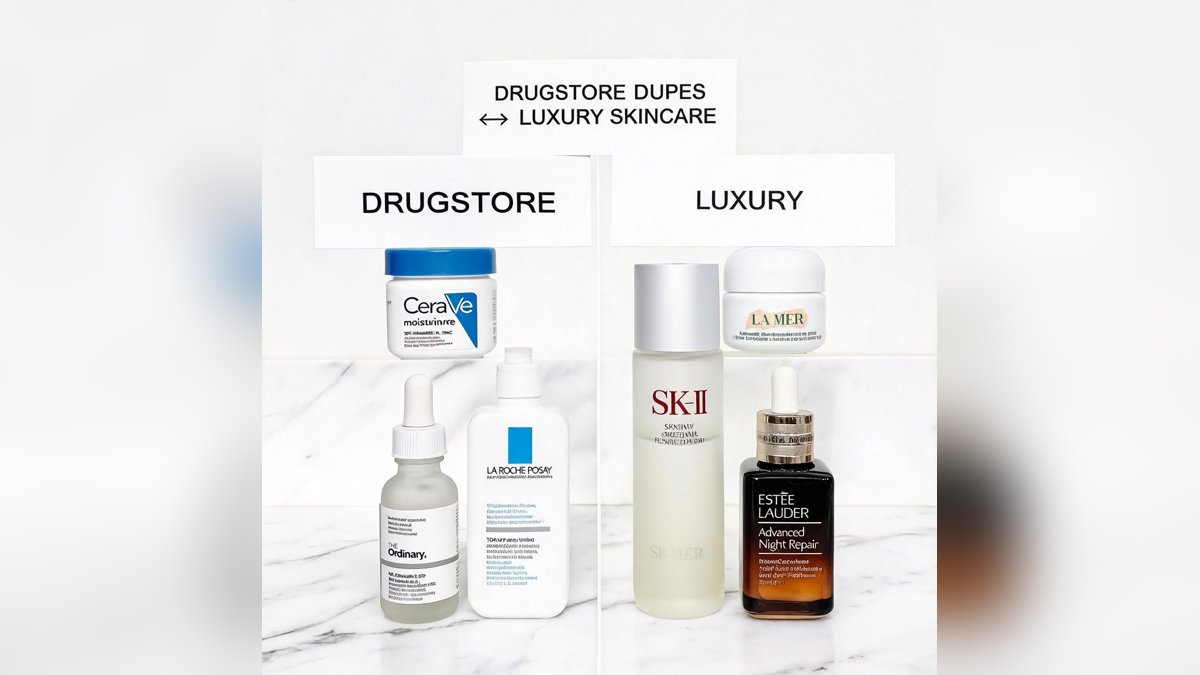
Cleansers: CeraVe Hydrating Facial Cleanser ($11) delivers the same ceramide and niacinamide technology found in luxury cleansers costing $40 or more. La Roche-Posay Toleriane Purifying Foaming Cream ($16) closely matches the formulation of higher-priced foaming cleansers with a similar pH and surfactant profile.
Moisturizers: CeraVe Moisturizing Cream ($14 for 16 oz) contains similar ceramide technology to SkinCeuticals Triple Lipid Restore 2:4:2 ($128). The texture is thicker and less elegant, but the moisturizing and barrier-repair effects are comparable for daily use.
Sunscreens: Trader Joe's Daily Facial Sunscreen ($9) is frequently cited as a near-dupe for Supergoop Unseen Sunscreen ($38). Both use chemical filters for invisible, weightless protection with zero white cast.
Retinol: The Ordinary Retinol 0.5% in Squalane ($8) provides the same active ingredient as higher-priced retinol serums. The squalane base is simple but effective. For encapsulated retinol delivery, Neutrogena Rapid Wrinkle Repair ($24) offers comparable technology to luxury retinol creams.
Hyaluronic Acid: The Ordinary Hyaluronic Acid 2% + B5 ($9) matches the hydration technology of much more expensive serums. Vichy Mineral 89 ($30) is a mid-range option that adds volcanic water for additional mineral content.
When to Splurge and When to Save
Splurge on vitamin C serums. The stabilization technology required for L-ascorbic acid to remain effective at the correct pH is expensive and difficult to replicate at drugstore price points. Skinceuticals CE Ferulic ($182) remains the clinical gold standard because of its patented stabilization system. Drugstore vitamin C serums often degrade before the bottle is finished.
Splurge on retinol with encapsulated delivery systems. Encapsulation reduces irritation and improves efficacy by releasing retinol gradually. Drugstore retinol products often use simpler formulations that are less effective and more irritating. Mid-range options like Neutrogena Rapid Wrinkle Repair offer a good compromise.
Save on cleansers, moisturizers, body lotions, and makeup removers. These categories use well-established formulation science that drugstore brands execute just as well as luxury brands. The differences are primarily in fragrance, texture, and packaging. For ingredient label reading tips applicable to dupe hunting, see How to Read Skincare Ingredient Labels: Decoding INCI Names Like a Pro.
Frequently Asked Questions
Common questions about finding and evaluating drugstore dupes for luxury skincare
What makes a skincare product a good dupe versus a cheap copy?
A good dupe matches the key active ingredients at similar concentrations, has a comparable delivery system, and delivers equivalent results. A cheap copy shares packaging or claims but uses lower concentrations, inferior ingredients, or poor formulation. To evaluate a dupe, compare the INCI ingredient list focusing on the first five to seven ingredients and the concentration of active ingredients. Independent reviews and clinical testing data are more reliable than brand marketing claims.
Which luxury skincare products have the best drugstore dupes?
Cleansers and moisturizers have the most reliable drugstore dupes because the formulation science is standardized. CeraVe and La Roche-Posay offer moisturizers nearly identical to luxury brands costing five times more. Sunscreen formulations from drugstore brands like Neutrogena, Supergoop, and Sun Bum match luxury SPF products in UVA/UVB protection. Vitamin C serums and retinol treatments have fewer exact dupes because the stabilization technology in luxury versions is harder to replicate at drugstore prices.
Is it worth buying luxury skincare at all?
Luxury skincare is worth the investment when the formulation technology is genuinely superior — stabilized vitamin C, encapsulated retinol, and patented peptide complexes often justify higher prices. Luxury brands also invest in clinical testing. However, for basic categories like cleansers, moisturizers, and body lotions, drugstore versions deliver equivalent results. A smart strategy is to buy drugstore for your core routine basics and splurge on one or two targeted treatment serums.
How do I compare ingredient lists to find dupes?
Start by identifying the key active ingredients in the luxury product. Check the first five ingredients, as they make up the largest percentage of the formula. Look for drugstore products with those same ingredients in similar positions on the INCI list. Pay attention to delivery systems — liposomal encapsulation, time-release technology, and specific pH levels affect efficacy. Websites like SkincareDupe.com and forums like r/SkincareAddiction maintain crowdsourced dupe lists that save research time.
Are luxury brand SPF products better than drugstore SPF?
Both luxury and drugstore SPF products must meet FDA standards for UVA and UVB protection in the US, so the core protection level is equivalent. The differences are in texture, finish, and cosmetic elegance. Luxury SPF often has better formulations for makeup layering, less white cast, and more elegant textures. Drugstore brands have improved significantly, with options like Supergoop Unseen Sunscreen dupe from Target and Neutrogena Invisible Daily Defense providing comparable performance at half the price.
Related Articles
Your Next Step
Audit your current skincare routine and identify which products you could replace with drugstore alternatives. Start with cleansers and moisturizers, where the savings are highest and the differences smallest.
Compare ingredient lists between your luxury products and drugstore options using the first-five-ingredients method. Keep your luxury splurges for treatment serums where delivery systems matter most. The savings from switching cleansers, moisturizers, and SPF to drugstore alternatives can fund a higher-quality retinol or vitamin C treatment. For a complete budget-friendly routine, read A Complete Skincare Routine Under $50: Products That Deliver.