Table of Contents
Key Takeaways
- Designer fragrances prioritize broad appeal and wearability while niche fragrances prioritize artistic expression and unique ingredients
- Niche fragrances typically cost more due to smaller production runs and higher quality raw materials
- Many designer houses now offer premium lines that blur the line between designer and niche quality
- Sampling is essential before committing to any full bottle, especially for niche fragrances with challenging profiles
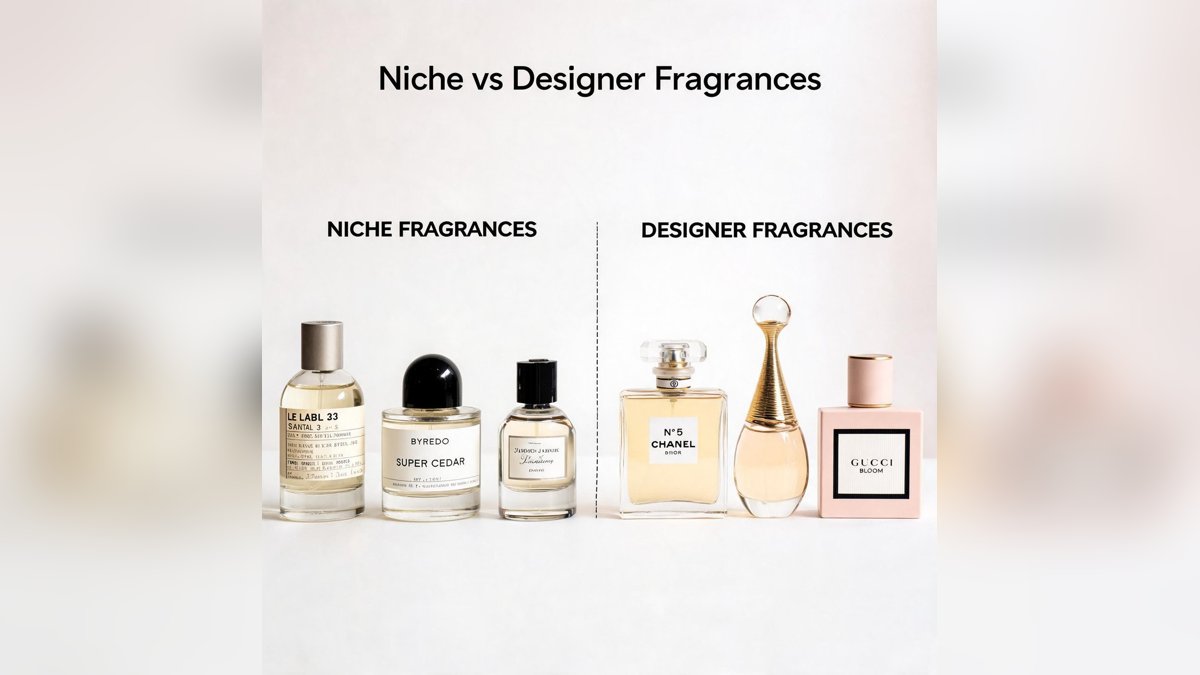
The distinction between niche and designer fragrances has become increasingly blurred in recent years, but understanding the core differences helps you make informed purchasing decisions. Designer fragrances come from fashion houses like Chanel, Dior, and Giorgio Armani that treat fragrance as an extension of their brand. Niche fragrances come from companies dedicated exclusively to perfume making, such as Creed, Byredo, and Frederic Malle.
The niche fragrance market has grown by over 20% annually in recent years, driven by consumer demand for individuality and unique scent profiles. Unlike designer fragrances that spend 30-50% of their budget on marketing, niche houses invest primarily in raw material quality and perfumer creativity.
Neither category is inherently superior. Each serves different priorities and different wearers. This guide breaks down the differences across ingredients, creativity, performance, and price, then helps you decide which path suits your fragrance journey.
Ingredients and Creativity
Designer fragrances are created for mass appeal. They undergo extensive market testing and are formulated to please a wide audience. This means they often use safe, familiar scent profiles with moderate sillage and mass-appeal ingredients. Niche fragrance houses have no such constraints. They use rare and expensive raw materials like real Oud, iris butter, and natural ambergris. Their perfumers have creative freedom to produce challenging, unconventional, and artistically driven scents.
This does not mean designer fragrances use poor ingredients. Major fashion houses invest heavily in quality, but they balance quality against production cost because they produce millions of bottles. A niche house producing 5,000 bottles can spend significantly more per bottle on ingredients.
Performance and Price
Niche fragrances generally perform better in terms of longevity and projection because they use higher oil concentrations and natural ingredients that adhere to skin longer. A typical niche Eau de Parfum may last 8 to 12 hours on skin, while a designer EDP lasts 4 to 8 hours. However, there are exceptions on both sides. Some designer fragrances like Dior Sauvage Elixir and Chanel Bleu de Chanel Parfum deliver exceptional performance.
Price differences are substantial. Designer fragrances typically cost $60 to $150 for 50ml to 100ml. Niche fragrances range from $100 to $500 or more for the same volume. You are paying for rarity, ingredients, and artistic vision rather than advertising budgets. That said, several niche houses offer accessible pricing, making the category more approachable than ever.
When to Buy Niche
Buy niche when you want a fragrance that expresses individuality and is unlikely to be worn by many people you meet. Invest in niche when you appreciate the artistry of perfume making and are willing to pay for rare ingredients. Choose niche when you have already built a foundation of designer scents and want to explore more challenging, unique profiles.
Start with accessible niche houses before diving into avant-garde brands. Acqua di Parma offers classic Italian refinement. Hermes Hermessence line provides sophisticated scents from a heritage house. Byredo and Le Labo offer modern niche aesthetics with wearability. These houses serve as excellent bridges from designer to niche territory.
Best Value Niche Houses
Mancera and Montale produce high-quality niche fragrances in the $80 to $150 range with exceptional longevity and projection. L'Occitane offers niche-quality scents at designer prices. Imaginary Authors and Etat Libre d'Orange provide creative, artistic fragrances at mid-range pricing around $100 to $140. Maison Margiela Replica offers approachable concept-driven scents at accessible prices.
For those willing to explore, discovering a niche house whose aesthetic aligns with your preferences is deeply satisfying. The journey of sampling and discovering what speaks to you is part of the appeal. For guidance on finding your perfect scent, see our guide to choosing a signature scent and learn about fragrance families.
Frequently Asked Questions
Common concerns about niche vs designer fragrances
Is niche fragrance always better quality than designer?
Not necessarily. Niche fragrances often use higher quality raw materials and more concentrated formulas, but designer fragrances from top houses use excellent ingredients too. Quality depends on the specific fragrance, not its category.
Why are niche fragrances so expensive?
Niche fragrances cost more because they are produced in smaller batches with higher quality ingredients. They also spend less on marketing and more on raw materials. You pay for rarity and artistry rather than advertising.
Can a beginner start with niche fragrances?
Yes, but start with accessible niche houses like Acqua di Parma, Comme des Garcons, or Hermes Hermessence. These offer unique scents that are less challenging than avant-garde niche brands. Sample before committing to a full bottle.
Do niche fragrances last longer than designer?
Niche fragrances tend to have higher oil concentrations and use natural ingredients that linger longer on skin. However, many designer fragrances now match niche performance, especially premium designer lines.
What is the best value niche fragrance house?
Mancera, Montale, and L'Occitane offer niche-quality fragrances at accessible prices. Imaginary Authors and Etat Libre d'Orange provide creative scents at mid-range pricing. These houses offer excellent entry points into niche perfumery.
Related Articles
Your Next Step
Now that you understand the differences between niche and designer fragrances, explore discovery sets from both categories.
For more guidance, explore our All Articles.